 Peps
Peps
What is BPC-157?
BPC-157 is a 15-amino-acid research peptide. Selected animal injury studies and a two-person human safety pilot explore different questions; neither establishes treatment benefit for injured patients.
Biological role or research focus
Experimental tissue-repair research.
A tendon-cell experiment cannot establish recovery time, pain relief, or a reliable injury treatment in people.
Role reference: Pentadecapeptide BPC 157 enhances the growth hormone receptor expression in tendon fibroblasts. ↗
Names you may encounter
BPC 157 · BPC157
Search terms can include brands, combinations, or historical names. They are not automatic product equivalents.
- Class / identity
- Experimental pentadecapeptide
- Main research area
- Tendon and tissue biology
- Evidence featured
- Rat tendon-cell study
- Source check
- October 4, 2026
Source: Pentadecapeptide BPC 157 enhances the growth hormone receptor expression in tendon fibroblasts. ↗
Molecular structure
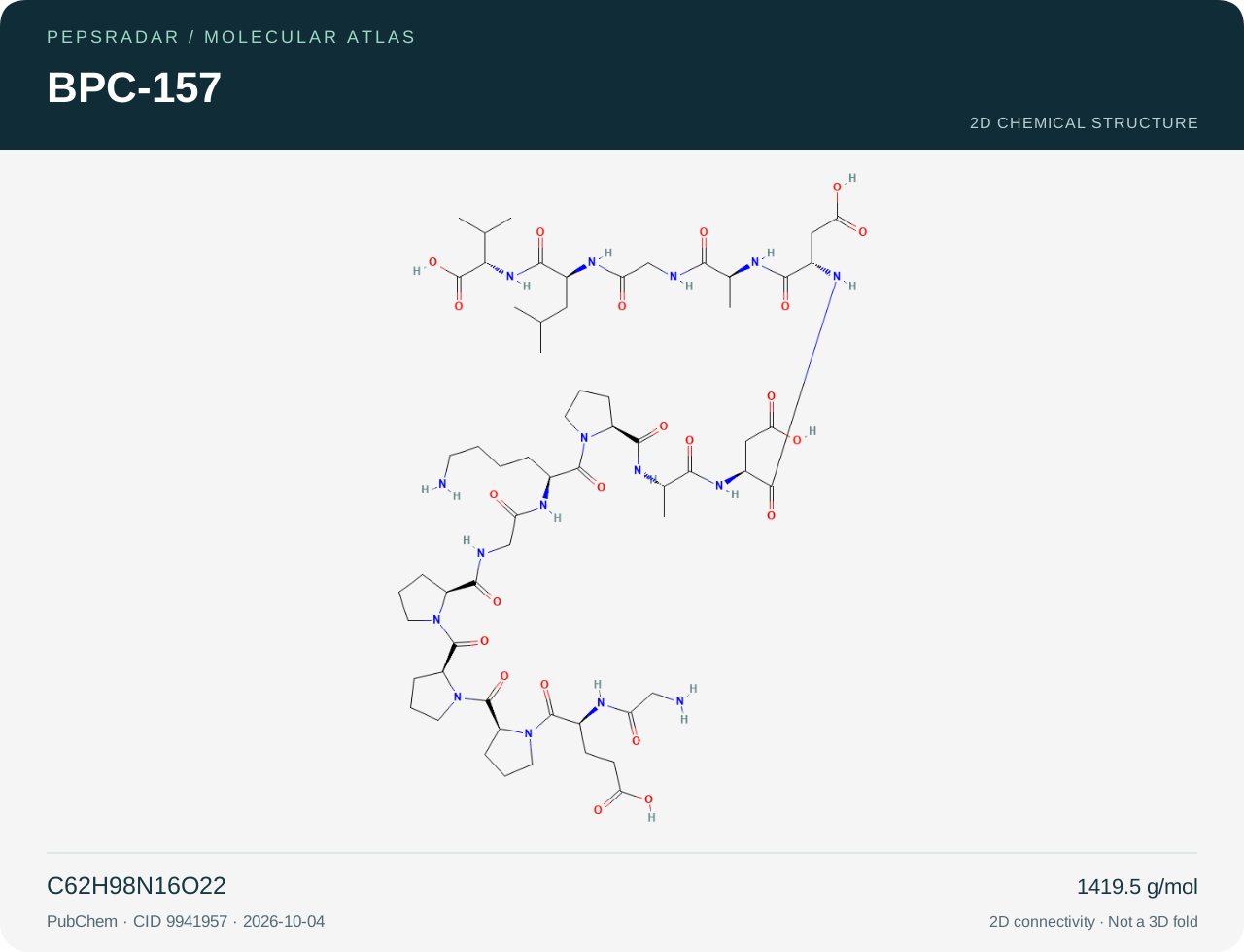
Mechanism & research rationale
One proposed pathway involves changing growth-hormone receptor expression in tendon fibroblasts. This offers a cellular hypothesis for repair research without establishing how an injured human tendon responds.
Source: Pentadecapeptide BPC 157 enhances the growth hormone receptor expression in tendon fibroblasts. ↗
Research context & status
This profile covers experimental tissue biology. The linked experiment does not provide an established clinical use, recovery timetable, or validated combination with TB-500. Human clinical claims need their own controlled evidence.
Source: Pentadecapeptide BPC 157 enhances the growth hormone receptor expression in tendon fibroblasts. ↗
What does the evidence show?
Selected published evidence, with the population, findings, and limits kept together. These original summaries draw on publication abstracts; they are not a systematic review.
Rat tendon-cell study · 2014
Growth-hormone receptor experiment
Pentadecapeptide BPC 157 enhances the growth hormone receptor expression in tendon fibroblasts.
- Population / model
- Fibroblasts isolated from rat Achilles tendons.
- Study design
- Cell-culture experiments measured growth-hormone receptor expression and responses to growth hormone.
- Main finding
- BPC-157 increased receptor expression, and the treated cells showed a greater proliferative response to growth hormone.
- Limits & context
- A change in isolated cells is a possible mechanism, not a measured improvement in human tendon strength, pain, return to sport, or long-term safety.
Source: Pentadecapeptide BPC 157 enhances the growth hormone receptor expression in tendon fibroblasts. ↗
Animal + cell study · 2003
Achilles tendon transection model
Did tissue and functional measures change after a surgically created tendon injury?
- Population / model
- Rats with transected Achilles tendons, with additional cultured tendon-cell experiments.
- Study design
- Controlled injury model with functional, mechanical, microscopic, and gross assessments over 14 days.
- Main finding
- The treated animals had better reported tendon mechanics, functional scores, and tissue organization than controls. Cell experiments also examined responses to an inhibitor of cell growth.
- How to read it
- This paper connects tissue observations with mechanical and functional measurements within a rat model.
- Limits & context
- An acute surgical injury in rats differs from human tendinopathy or rehabilitation. These findings do not establish a human recovery time, effective clinical treatment, or long-term safety.
Source: Staresinic et al. · Journal of Orthopaedic Research · 2003 ↗
Animal study · 2010
Medial collateral ligament healing
Was the repair signal also observed in a ligament injury model?
- Population / model
- Rats after surgical transection of the medial collateral ligament.
- Study design
- Controlled experiments with different administration routes and follow-up extending to 90 days.
- Main finding
- The authors reported improvements in functional, mechanical, gross, and histological measures of ligament healing.
- How to read it
- A ligament model broadens the preclinical questions beyond the earlier tendon experiment.
- Limits & context
- This remains animal evidence. Several routes studied in a model do not establish equivalent exposure, benefit, or safety in people.
Source: Cerovecki et al. · Journal of Orthopaedic Research · 2010 ↗
Uncontrolled human pilot · 2025
BPC-157 · two-person safety pilot
What can the recent intravenous pilot establish?
- Population / model
- Two adults aged 58 and 68 who had both received intravenous BPC-157 before the study.
- Study design
- Single private-clinic pilot with blood tests, vital signs, and reported symptoms over three days; no comparator.
- Main finding
- No reported side effects or measurable changes in the tested organ-function biomarkers were observed during the short monitoring period.
- How to read it
- Two previously exposed participants provide a very limited observation, not evidence of general safety.
- Limits & context
- The study cannot detect uncommon or delayed harms, establish injury-healing efficacy, or validate research-use products. The authors’ broad safety conclusion exceeds what this design can establish. Larger controlled studies and pharmaceutical-quality identity checks remain necessary.
Read the original paper for methods, adverse events, funding, and conflicts of interest. Publisher access may require a subscription.
Search additional PubMed records ↗New editorial updates
New source discoveries
Links appear automatically. Unreviewed discoveries are not verified medical findings.
Safety & precautions
Safety evidence & remaining uncertainty
FDA flags limited safety information. The tendon-cell paper cannot measure systemic adverse effects, immune reactions, or long-term risks. A vendor purity result would answer a different question from clinical safety.
Source: FDA · Peptide compounding safety concerns ↗
Human pilot does not establish safety
The recent pilot monitored only two previously exposed adults for three days. It cannot exclude delayed or uncommon harms and did not test injury-healing benefit.
Source: BPC-157 · two-person safety pilot · 2025 ↗
This is not a complete list of contraindications, interactions, or adverse effects. Medicine labels apply to specific products and indications; research-use listings are not interchangeable with approved medicines.
What are people discussing?
Separating perceived peptide effects from changed habits
The speakers name several peptides while discussing how changes in nutrition, sleep, and training can accompany perceived benefits. This is a discussion of experience and confounding factors, not a controlled comparison.
Did a study isolate the peptide’s effect from simultaneous changes in behavior?
Caption excerpt reviewed · Claims not independently verified · 2026-10-04
Original episode: BURN FAT FASTER WITH MOTS C | Josh Holyfield | Real Bodybuilding Podcast
Watch the source discussions
78 matching video records · 8 with captions indexed.
Across the full library, 30 caption files are indexed from 20,199 inventoried videos. Most transcripts remain unreviewed. Select a thumbnail or timestamp to watch inside PepsRadar. Thumbnail images load from YouTube.

Fouad Abiad Media
BURN FAT FASTER WITH MOTS C | Josh Holyfield | Real Bodybuilding Podcast ↗
Captions indexed · Automatic matches need review
MAKE Wellness Official
The Peptide PhDs Podcast: A Peptide's Incredible Journey ↗
Captions indexed · Automatic matches need review

Mind Pump Show
Hormones, Peptides & Body Transformation with Phil Vella CEO of Vita Bella Health | Mind Pump 2882 ↗
Captions indexed · Automatic matches need review

Mind Pump Show
Peptides vs Bioregulators: The Future of Health Optimization w/ Nick Andrews | Mind Pump 2672 ↗
Captions indexed · Automatic matches need review

Peptide Of The Week
Telehealth vs Research Peptides: The Truth Nobody Tells You | Peptide of the Week Q&A #61 ↗
Captions indexed · Automatic matches need review

Thomas DeLauer
The Best Peptide to Truly Lose Fat is Not GLP-1, it’s MOTS-C to Boost Mitochondria ↗
Captions indexed · Automatic matches need review
Sources & supplier listings
Listings are grouped by the vendor’s stated identity. Blends and modified derivatives are labeled separately. Inclusion is not a quality assessment or an endorsement.
BPC-157 (10mg)
BioLongevity Labs · Vendor-labeled research use only
$99.97
Listed in stock · Snapshot 2026-10-04
Options may vary. Shipping and tax excluded.
Affiliate link · PepsRadar may earn a commission from purchases through this link. Affiliate disclosure.
BPC-157 TB-500 Blend (10mg)
BioLongevity Labs · Vendor-labeled research use only
$119.97
Listed in stock · Snapshot 2026-10-04
Options may vary. Shipping and tax excluded.
Blend ingredients & evidence →
View seller listing ↗Affiliate link · PepsRadar may earn a commission from purchases through this link. Affiliate disclosure.
GLOW Blend (BPC-157 TB-500 GHK-CU) (70mg)
BioLongevity Labs · Vendor-labeled research use only
$259.97
Listed in stock · Snapshot 2026-10-04
Options may vary. Shipping and tax excluded.
Blend ingredients & evidence →
View seller listing ↗Affiliate link · PepsRadar may earn a commission from purchases through this link. Affiliate disclosure.
KLOW Blend (GHK-Cu, BPC-157, TB-500, KPV) 80mg
BioLongevity Labs · Vendor-labeled research use only
$274.97
Listed in stock · Snapshot 2026-10-04
Options may vary. Shipping and tax excluded.
Blend ingredients & evidence →
View seller listing ↗Affiliate link · PepsRadar may earn a commission from purchases through this link. Affiliate disclosure.
Regeno Blend (BPC-157, TB-500, Cartalax) 30mg
BioLongevity Labs · Vendor-labeled research use only
$279.97
Listed in stock · Snapshot 2026-10-04
Options may vary. Shipping and tax excluded.
Blend ingredients & evidence →
View seller listing ↗Affiliate link · PepsRadar may earn a commission from purchases through this link. Affiliate disclosure.
BPC-157 (5 mg / 10 mg / 15 mg)
American Peptides · Vendor-labeled research use only
$60.00–$100.00
Listed in stock · Snapshot 2026-10-05
Options may vary. Shipping and tax excluded.
Affiliate link · PepsRadar may earn a commission from purchases through this link. Affiliate disclosure.
BPC-157 + TB-500 (20 mg)
American Peptides · Vendor-labeled research use only
$195.00
Listed in stock · Snapshot 2026-10-05
Options may vary. Shipping and tax excluded.
Affiliate link · PepsRadar may earn a commission from purchases through this link. Affiliate disclosure.
BPC-157 (5 mg / 10 mg)
PSPeptides · Vendor-labeled research use only
$49.99–$89.99
Listed in stock · Snapshot 2026-10-05
Options may vary. Shipping and tax excluded.
Affiliate link · PepsRadar may earn a commission from purchases through this link. Affiliate disclosure.
BPC-157 + TB-500 blend (20 mg (10+10 mg) / 10 mg (5+5 mg))
PSPeptides · Vendor-labeled research use only
$59.99–$79.99
Listed in stock · Snapshot 2026-10-05
Options may vary. Shipping and tax excluded.
Affiliate link · PepsRadar may earn a commission from purchases through this link. Affiliate disclosure.
Catalog checked 2026-10-04. Seller listings retain their stated intended use. Shops covered: BioLongevity Labs, BioLongevity Supplements, American Peptides, PSPeptides. This is not a market-wide comparison. Affiliate participation does not determine evidence or editorial coverage.
Questions worth asking
- What specific product, route, and research population does the claim refer to?
- Does the source measure an outcome in people, or only a laboratory marker?
- A tendon-cell experiment cannot establish recovery time, pain relief, or a reliable injury treatment in people.
- What adverse effects, uncertainty, and conflicts of interest does the original source report?
Frequently asked questions
Does a tendon-cell result prove faster injury recovery?
No. Cell proliferation, tendon strength, pain, and return to activity are separate outcomes.
Source: Pentadecapeptide BPC 157 enhances the growth hormone receptor expression in tendon fibroblasts. ↗
Can BPC-157 and TB-500 be treated as a proven combination?
No combination trial is summarized here. Evidence for either material alone cannot establish the effectiveness or safety of their combination.
Source: Pentadecapeptide BPC 157 enhances the growth hormone receptor expression in tendon fibroblasts. ↗
What does the additional research establish?
A ligament model broadens the preclinical questions beyond the earlier tendon experiment. This remains animal evidence. Several routes studied in a model do not establish equivalent exposure, benefit, or safety in people.
Source: Cerovecki et al. · Journal of Orthopaedic Research · 2010 ↗
References & editorial record
- FDA · Compounding safety concerns ↗
- BPC-157 tendon-cell study (2014) ↗
- Staresinic et al. · Journal of Orthopaedic Research · 2003 ↗
- Cerovecki et al. · Journal of Orthopaedic Research · 2010 ↗
- BPC-157 · two-person safety pilot · 2025 ↗
Source notes checked 2026-10-04. Original PepsRadar summaries. Not reviewed by a medical professional. Topic grouping is editorial navigation, not a treatment recommendation. Video notes specify which excerpts were reviewed; no full transcripts are published.
PUT THE EVIDENCE IN CONTEXT
Research guides

RESEARCH FIELD GUIDE
From a promising mechanism to a useful finding
A practical way to read peptide research without turning an interesting experiment into a clinical promise.
Read the guide →
RESEARCH FIELD GUIDE
BPC-157 vs TB-500: compare the research, not the reputation
Tendon models, fragment identity, and a tiny eye-drop trial answer different questions. Here is how to keep them separate.
Read the guide →
RESEARCH FIELD GUIDE
How to read a peptide certificate without confusing it with a guarantee
A worked example separates directory references, certificate IDs, batch numbers, reported results, and unanswered questions.
Read the guide →RESEARCH FIELD GUIDE
Is BPC-157 FDA approved? What the FDA and the research actually say
No. BPC-157 is not approved by the FDA for any use, the FDA has flagged it as a compounding safety risk, and its healing evidence comes almost entirely from animal studies.
Read the guide →