 Peps
Peps
What is Thymosin beta-4?
Thymosin beta-4 is a full-length 43-residue peptide studied in tissue biology. The selected human study tested an ophthalmic preparation for dry eye, with negative primary endpoints.
Biological role or research focus
Tissue biology and ophthalmic research.
Secondary findings should be interpreted alongside failure of the primary endpoints. The ophthalmic route and dry-eye population do not establish safety or efficacy of systemic use.
Names you may encounter
Tβ4 · RGN-259
Search terms can include brands, combinations, or historical names. They are not automatic product equivalents.
- Class / identity
- Full-length 43-residue actin-binding peptide
- Research focus
- Tissue biology and ophthalmic research
- Featured evidence
- Human randomized trial
- Source check
- October 4, 2026
Molecular structure
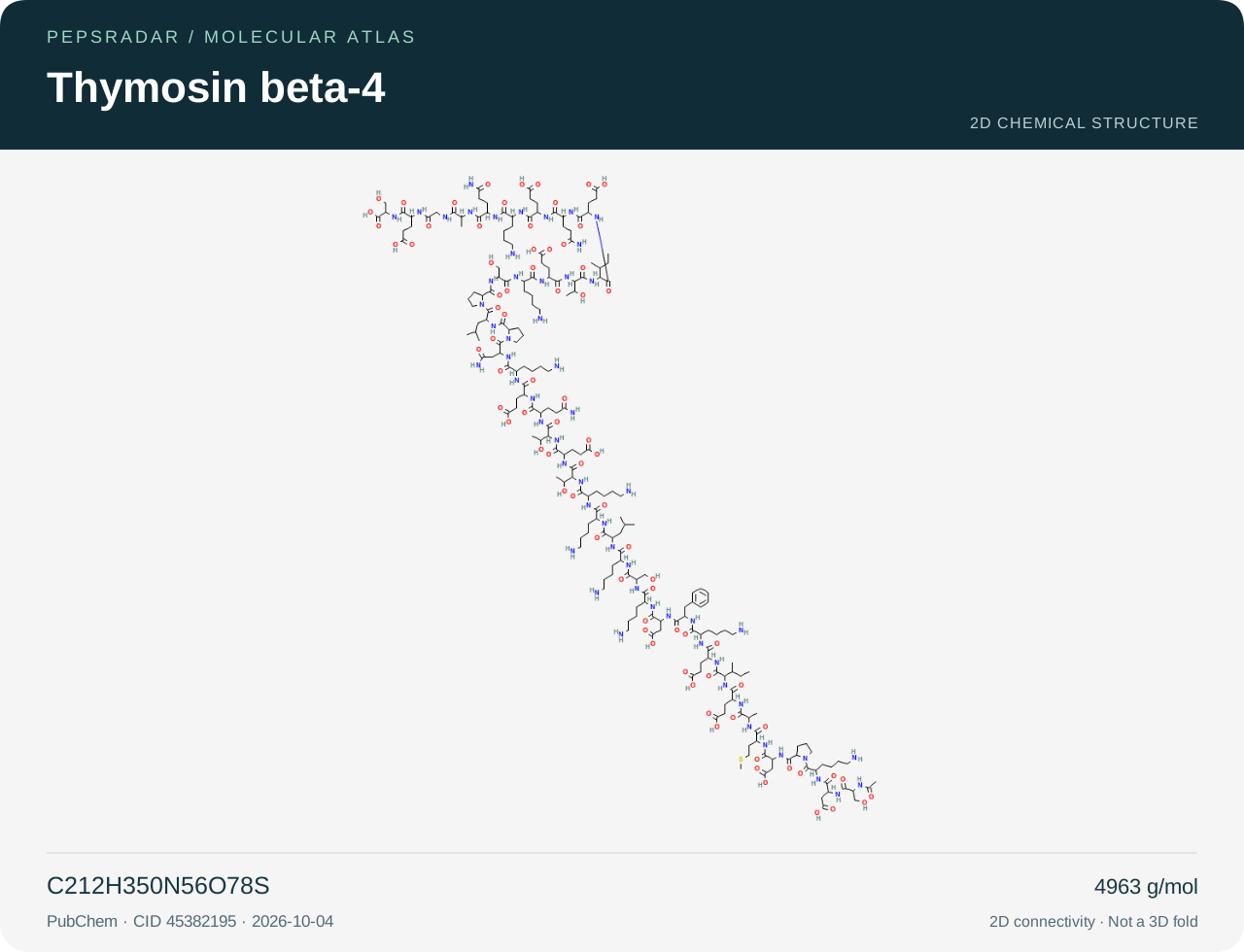
How Thymosin beta-4 works
Thymosin beta-4 is associated with actin binding and tissue responses. This biological role motivates research but does not establish a clinical tissue-repair treatment.
Clinical context & research status
The featured study concerns eye drops for moderate to severe dry eye. It does not establish a systemic injury-recovery use or validate material sold as TB-500.
What does the evidence show?
Selected published evidence, with the population, findings, and limits kept together. These original summaries draw on publication abstracts; they are not a systematic review.
Human randomized trial · 2015
RGN-259 dry-eye phase 2 study
Did ophthalmic treatment meet the primary dry-eye endpoints?
- Population / model
- 72 people with moderate to severe dry eye.
- Study design
- Randomized double-masked placebo-controlled phase 2 ophthalmic study over 28 days.
- Main finding
- Neither primary endpoint—ocular discomfort nor inferior corneal staining at day 29—showed a statistically significant treatment benefit. Some secondary outcomes favored treatment.
- Limits & context
- Secondary findings should be interpreted alongside failure of the primary endpoints. The ophthalmic route and dry-eye population do not establish safety or efficacy of systemic use.
Human phase 2 randomized trial · undefined
RGN-259 · small severe dry-eye trial
What did a small ophthalmic experiment report?
- Population / model
- Nine patients with severe dry eye; the abstract reports outcomes for 12 treated eyes and six control eyes.
- Study design
- Two-site double-masked vehicle-controlled trial: 28 days of eye drops and another 28 days of follow-up.
- Main finding
- At day 56, the reported reductions relative to vehicle were 35.1% for ocular discomfort and 59.1% for total corneal fluorescein staining. Treatment was described as well tolerated.
- How to read it
- Eyes and patients are different units; 18 eyes do not mean 18 independent participants.
- Limits & context
- Very small sample and multiple assessment times limit confidence. Read beside the larger 72-person trial, which missed its primary endpoints. Ophthalmic findings do not establish systemic injury recovery or equivalence to TB-500 fragments.
Read the original paper for methods, adverse events, funding, and conflicts of interest. Publisher access may require a subscription.
Search additional PubMed records ↗New editorial updates
New source discoveries
Links appear automatically. Unreviewed discoveries are not verified medical findings.
Safety & precautions
What the featured evidence can tell us
No adverse events were reported in this small short study, which cannot exclude uncommon harms or establish safety across other routes.
Identity, route, and evidence limits
Secondary findings should be interpreted alongside failure of the primary endpoints. The ophthalmic route and dry-eye population do not establish safety or efficacy of systemic use.
This is not a complete list of contraindications, interactions, or adverse effects. Medicine labels apply to specific products and indications; research-use listings are not interchangeable with approved medicines.
What are people discussing?
No editorial transcript note has been reviewed for this profile yet. Below are the matching video records available for exploration; title and caption matches are not verified claims.
Watch the source discussions
2 matching video records · 1 with captions indexed.
Across the full library, 30 caption files are indexed from 20,199 inventoried videos. Most transcripts remain unreviewed. Select a thumbnail or timestamp to watch inside PepsRadar. Thumbnail images load from YouTube.
Dr. Trevor Bachmeyer
BPC-157: The Forever Peptide I Take Every Single Day - Dr Trevor Bachmeyer ↗
Captions indexed · Automatic matches need review

Thomas DeLauer
The Best Muscle Building & Fat Loss Peptide | TB-500 (Thymosin Beta 4) Benefits & Risks ↗
Title match · Captions not indexed
Sources & supplier listings
Listings are grouped by the vendor’s stated identity. Blends and modified derivatives are labeled separately. Inclusion is not a quality assessment or an endorsement.
KLOW Blend (GHK-Cu, BPC-157, TB-500, KPV) 80mg
BioLongevity Labs · Vendor-labeled research use only
$274.97
Listed in stock · Snapshot 2026-10-04
Options may vary. Shipping and tax excluded.
Blend ingredients & evidence →
View seller listing ↗Affiliate link · PepsRadar may earn a commission from purchases through this link. Affiliate disclosure.
Regeno Blend (BPC-157, TB-500, Cartalax) 30mg
BioLongevity Labs · Vendor-labeled research use only
$279.97
Listed in stock · Snapshot 2026-10-04
Options may vary. Shipping and tax excluded.
Blend ingredients & evidence →
View seller listing ↗Affiliate link · PepsRadar may earn a commission from purchases through this link. Affiliate disclosure.
GLOW Blend (BPC-157 TB-500 GHK-CU) (70mg)
BioLongevity Labs · Vendor-labeled research use only
$259.97
Listed in stock · Snapshot 2026-10-04
Options may vary. Shipping and tax excluded.
Blend ingredients & evidence →
View seller listing ↗Affiliate link · PepsRadar may earn a commission from purchases through this link. Affiliate disclosure.
Catalog checked 2026-10-04. Seller listings retain their stated intended use. Shops covered: BioLongevity Labs, BioLongevity Supplements, American Peptides, PSPeptides. This is not a market-wide comparison. Affiliate participation does not determine evidence or editorial coverage.
Questions worth asking
- Is thymosin beta-4 the same as TB-500?
- What population, comparator, and route were actually studied?
- Secondary findings should be interpreted alongside failure of the primary endpoints. The ophthalmic route and dry-eye population do not establish safety or efficacy of systemic use.
- What adverse effects, uncertainty, and conflicts of interest does the original source report?
Frequently asked questions
Is thymosin beta-4 the same as TB-500?
This site distinguishes full-length thymosin beta-4 from the acetylated seven-residue TB-500 fragment shown in its separate profile. Vendor naming alone cannot establish identity.
Does this page establish a supplier’s product quality?
No. A publication describes its own tested material. It does not verify a supplier listing, batch identity, purity, or clinical suitability.
References & editorial record
Source notes checked 2026-10-04. Original PepsRadar summaries. Not reviewed by a medical professional. Topic grouping is editorial navigation, not a treatment recommendation. Video notes specify which excerpts were reviewed; no full transcripts are published.
PUT THE EVIDENCE IN CONTEXT
Research guides

RESEARCH FIELD GUIDE
TB-500 vs thymosin beta-4: a fragment is not the whole protein
TB-500 and thymosin beta-4 are often used as if they were the same thing. They are not, and most of the human research involves the full protein, not the fragment sold as TB-500.
Read the guide →