 Peps
Peps
What is Leuprolide?
Leuprolide is a GnRH agonist used to control sex-hormone signaling in several conditions. It belongs to a different pathway from growth-hormone secretagogues.
Biological role or research focus
GnRH-related control of reproductive hormones.
The clinical effect depends on sustained treatment and the condition; it should not be grouped with growth-hormone releasers.
Role reference: MedlinePlus · Leuprolide ↗
Names you may encounter
Lupron
Search terms can include brands, combinations, or historical names. They are not automatic product equivalents.
- Class / identity
- GnRH agonist
- Main research area
- Reproductive-hormone suppression
- Evidence featured
- Human randomized trial
- Source check
- October 4, 2026
Source: MedlinePlus · Leuprolide ↗
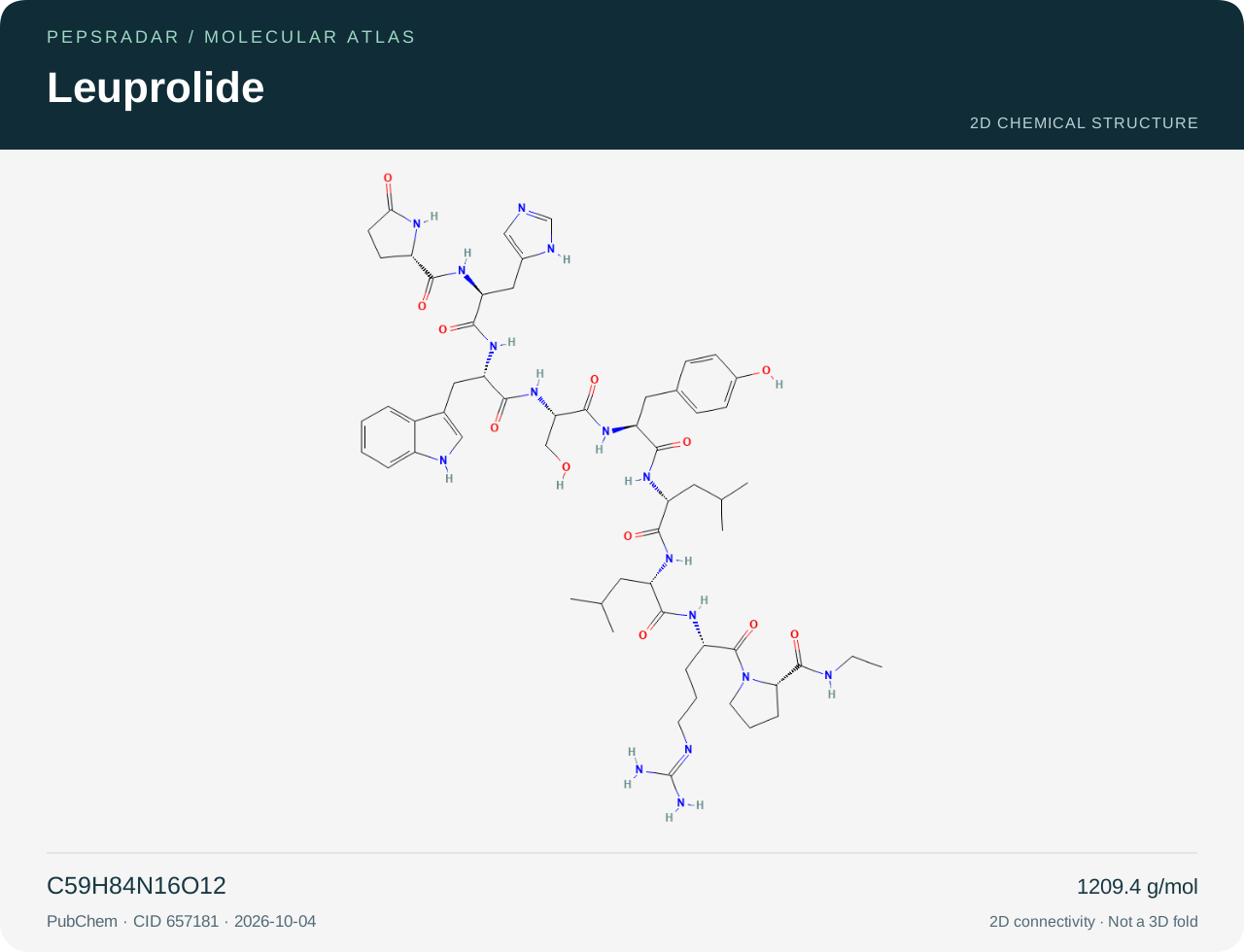
Molecular structure
Mechanism & research rationale
Sustained GnRH-pathway stimulation ultimately suppresses gonadal hormone production. The resulting clinical effect depends on the treatment duration and the condition.
Source: MedlinePlus · Leuprolide ↗
Clinical uses & product context
Product-dependent uses include prostate cancer, central precocious puberty, endometriosis, and fibroid-associated anemia. Evidence for one indication should not be substituted for another.
Source: MedlinePlus · Leuprolide ↗
What does the evidence show?
Selected published evidence, with the population, findings, and limits kept together. These original summaries draw on publication abstracts; they are not a systematic review.
Human randomized trial · 1984
Historical prostate-cancer comparison
Leuprolide versus diethylstilbestrol for metastatic prostate cancer.
- Population / model
- 199 patients with previously untreated metastatic prostate cancer.
- Study design
- Leuprolide versus diethylstilbestrol, with crossover permitted on progression or intolerable effects.
- Main finding
- Hormonal suppression and overall response were similar; adverse-effect patterns differed. One-year survival was not significantly different.
- Limits & context
- This is historical evidence against an older comparator, not a ranking of today’s treatment options. Prostate-cancer findings do not establish benefit for every other leuprolide indication.
Source: Leuprolide versus diethylstilbestrol for metastatic prostate cancer. ↗
Read the original paper for methods, adverse events, funding, and conflicts of interest. Publisher access may require a subscription.
Further reading · 4 additional publication links
Exact-name PubMed search checked 2026-10-04. These records have not been appraised. A name match can include related compounds, combinations, or other formulations; it does not establish safety or benefit.
Improved Outcomes with Enzalutamide in Biochemically Recurrent Prostate Cancer. ↗
The New England journal of medicine · 2023 Oct 19 · Clinical Trial, Phase III, Comparative Study, Journal Article, Randomized Controlled Trial, Research Support, Non-U.S. Gov't
Oral Relugolix for Androgen-Deprivation Therapy in Advanced Prostate Cancer. ↗
The New England journal of medicine · 2020 Jun 4 · Clinical Trial, Phase III, Comparative Study, Equivalence Trial, Journal Article, Multicenter Study, Randomized Controlled Trial, Research Support, Non-U.S. Gov't
Leuprolide. ↗
· 2026 Jan · Study Guide
Improved Survival with Enzalutamide in Biochemically Recurrent Prostate Cancer. ↗
The New England journal of medicine · 2026 Feb 5 · Journal Article, Randomized Controlled Trial, Clinical Trial, Phase III, Multicenter Study, Comparative Study
New editorial updates
New source discoveries
Links appear automatically. Unreviewed discoveries are not verified medical findings.
Safety & precautions
Key precautions
Bone-density loss, hot flashes, mood changes, and metabolic or cardiovascular concerns can matter. Pregnancy is incompatible with these treatment uses; specific contraindications and monitoring belong to the product label.
Source: MedlinePlus · Leuprolide ↗
This is not a complete list of contraindications, interactions, or adverse effects. Medicine labels apply to specific products and indications; research-use listings are not interchangeable with approved medicines.
What are people discussing?
No editorial transcript note has been reviewed for this profile yet. Below are the matching video records available for exploration; title and caption matches are not verified claims.
Watch the source discussions
0 matching video records · 0 with captions indexed.
Across the full library, 30 caption files are indexed from 20,199 inventoried videos. Most transcripts remain unreviewed. Select a thumbnail or timestamp to watch inside PepsRadar. Thumbnail images load from YouTube.
No matching video has been identified in the current snapshot.
Sources & supplier listings
Listings are grouped by the vendor’s stated identity. Blends and modified derivatives are labeled separately. Inclusion is not a quality assessment or an endorsement.
We have not added a supplier for this profile. Missing products and coded listings are not filled with guesses.
Catalog checked 2026-10-04. Seller listings retain their stated intended use. Shops covered: BioLongevity Labs, BioLongevity Supplements, American Peptides, PSPeptides. This is not a market-wide comparison. Affiliate participation does not determine evidence or editorial coverage.
Questions worth asking
- Which indication and formulation does the source describe?
- Does the video make a broader claim than the source supports?
- The clinical effect depends on sustained treatment and the condition; it should not be grouped with growth-hormone releasers.
- What adverse effects, uncertainty, and conflicts of interest does the original source report?
Frequently asked questions
Is leuprolide intended to boost testosterone?
Sustained therapeutic use generally aims at suppression of reproductive hormones. It should not be grouped with testosterone-enhancement products.
Source: MedlinePlus · Leuprolide ↗
Why include an older cancer study?
It documents the clinical evidence history, while its older comparator limits relevance to today’s treatment choices.
Source: Leuprolide versus diethylstilbestrol for metastatic prostate cancer. ↗
References & editorial record
Source notes checked 2026-10-04. Original PepsRadar summaries. Not reviewed by a medical professional. Topic grouping is editorial navigation, not a treatment recommendation. Video notes specify which excerpts were reviewed; no full transcripts are published.