 Peps
Peps
What is Ziconotide?
Ziconotide is a venom-derived peptide medicine that blocks N-type calcium channels. Its pain research concerns specialist intrathecal delivery, not a generic injectable recovery peptide.
Biological role or research focus
Specialist intrathecal pain treatment.
The study was short and examined a specialized delivery route in a severely affected population. It cannot establish long-term benefit-risk or a general injury-recovery use.
Role reference: Intrathecal ziconotide in the treatment of refractory pain in patients with cancer or AIDS: a randomized controlled trial. · 2004 ↗
Names you may encounter
Prialt
Search terms can include brands, combinations, or historical names. They are not automatic product equivalents.
- Class / identity
- Venom-derived N-type calcium-channel blocker peptide
- Research focus
- Specialist intrathecal pain treatment
- Featured evidence
- Human randomized trial
- Source check
- October 4, 2026
Molecular structure
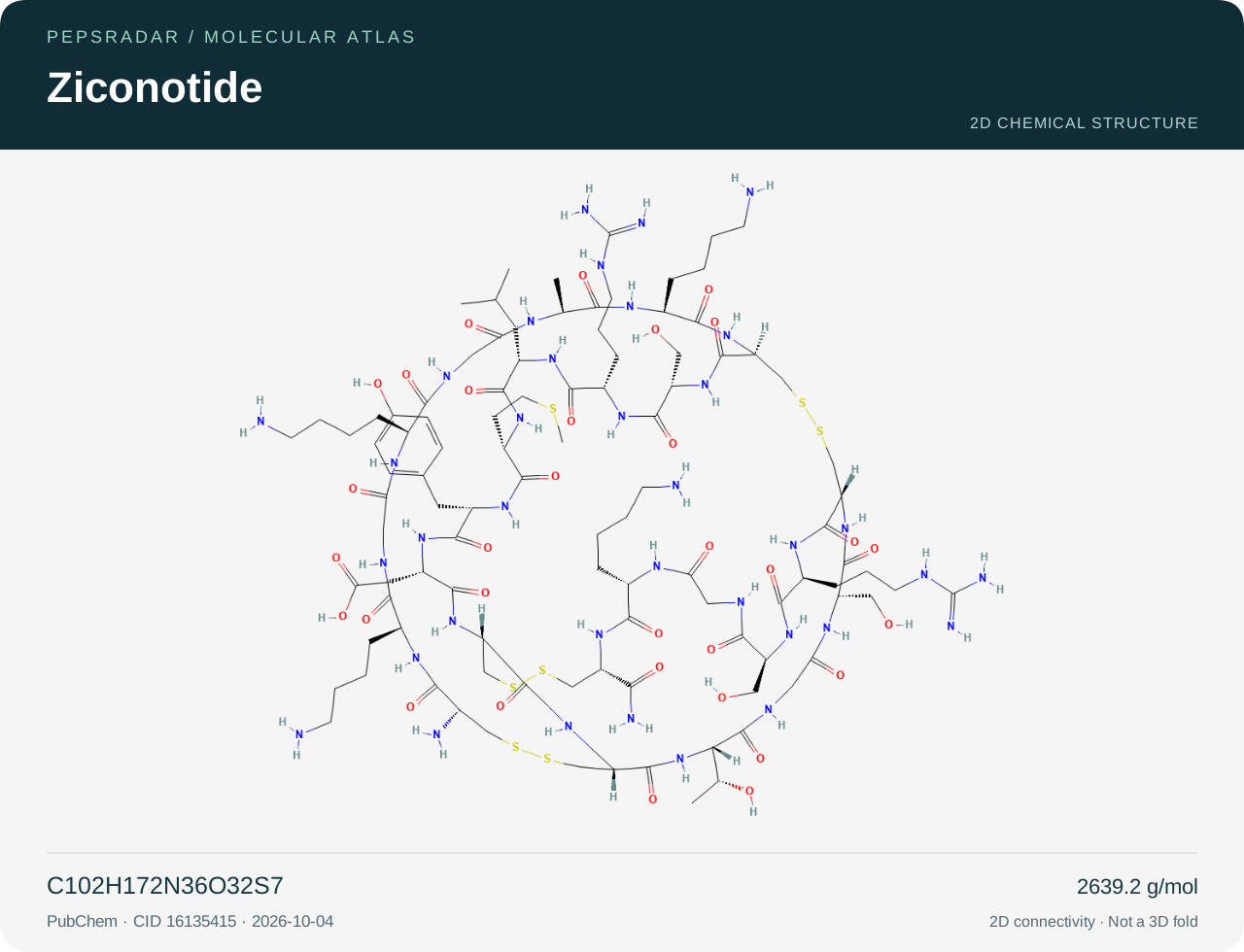
How Ziconotide works
Blocking N-type calcium channels modifies pain-signal transmission. The route is part of the intervention: delivery into spinal fluid is different from a skin or muscle injection.
Medicine status & clinical context
EMA describes Prialt as an authorized medicine for severe chronic pain requiring intrathecal analgesia. This is a specialist pain-treatment context; an authorization for a particular medicine is not approval of a supplier’s preparation.
The selected trial studied refractory pain in patients with cancer or AIDS. EMA’s Prialt information provides the product context; specialist administration and product-specific precautions matter.
Source: EMA · Prialt authorization and product overview ↗
Source: EMA · Prialt overview ↗
What does the evidence show?
Selected published evidence, with the population, findings, and limits kept together. These original summaries draw on publication abstracts; they are not a systematic review.
Human randomized trial · 2004
Ziconotide refractory-pain randomized trial
Did intrathecal ziconotide reduce refractory pain versus placebo?
- Population / model
- 111 patients with refractory pain due to cancer or AIDS, studied at 32 centers.
- Study design
- Randomized double-blind placebo-controlled intrathecal study with a short titration period and a five-day maintenance phase.
- Main finding
- Mean visual-analog pain-intensity improvement was 53.1% with ziconotide versus 18.1% with placebo.
- Limits & context
- The study was short and examined a specialized delivery route in a severely affected population. It cannot establish long-term benefit-risk or a general injury-recovery use.
Read the original paper for methods, adverse events, funding, and conflicts of interest. Publisher access may require a subscription.
Further reading · 4 additional publication links
Exact-name PubMed search checked 2026-10-04. These records have not been appraised. A name match can include related compounds, combinations, or other formulations; it does not establish safety or benefit.
The Diagnosis and Treatment of Neuropathic Pain. ↗
Deutsches Arzteblatt international · 2024 Dec 13 · Journal Article, Review
Read available full text ↗
Ziconotide. ↗
· 2006 · Review
The Physiology, Pathology, and Pharmacology of Voltage-Gated Calcium Channels and Their Future Therapeutic Potential. ↗
Pharmacological reviews · 2015 Oct · Journal Article, Research Support, Non-U.S. Gov't, Review
Read available full text ↗
Ziconotide. ↗
· 2025 Jan · Study Guide
New editorial updates
New source discoveries
Links appear automatically. Unreviewed discoveries are not verified medical findings.
Safety & precautions
What the featured evidence can tell us
The complete product information is needed for neurological and other precautions. Intrathecal medicine requires specialist selection, delivery, and monitoring; the trial is not an instruction for self-administration.
Source: EMA · Prialt overview ↗
Identity, route, and evidence limits
The study was short and examined a specialized delivery route in a severely affected population. It cannot establish long-term benefit-risk or a general injury-recovery use.
Official product context · checked October 4, 2026
EMA describes confusion, memory impairment, dizziness, and other neurological effects among reported adverse reactions. Specialist delivery and the full product precautions are essential to interpreting its benefits.
Source: EMA · Prialt authorization and product overview ↗
This is not a complete list of contraindications, interactions, or adverse effects. Medicine labels apply to specific products and indications; research-use listings are not interchangeable with approved medicines.
What are people discussing?
No editorial transcript note has been reviewed for this profile yet. Below are the matching video records available for exploration; title and caption matches are not verified claims.
Watch the source discussions
0 matching video records · 0 with captions indexed.
Across the full library, 30 caption files are indexed from 20,199 inventoried videos. Most transcripts remain unreviewed. Select a thumbnail or timestamp to watch inside PepsRadar. Thumbnail images load from YouTube.
No matching video has been identified in the current snapshot.
Sources & supplier listings
Listings are grouped by the vendor’s stated identity. Blends and modified derivatives are labeled separately. Inclusion is not a quality assessment or an endorsement.
We have not added a supplier for this profile. Missing products and coded listings are not filled with guesses.
Catalog checked 2026-10-04. Seller listings retain their stated intended use. Shops covered: BioLongevity Labs, BioLongevity Supplements, American Peptides, PSPeptides. This is not a market-wide comparison. Affiliate participation does not determine evidence or editorial coverage.
Questions worth asking
- Does this establish a general-purpose pain peptide?
- What population, comparator, and route were actually studied?
- The study was short and examined a specialized delivery route in a severely affected population. It cannot establish long-term benefit-risk or a general injury-recovery use.
- What adverse effects, uncertainty, and conflicts of interest does the original source report?
Frequently asked questions
Does this establish a general-purpose pain peptide?
No. The trial concerns a particular medicine, intrathecal route, and refractory-pain population. Those findings cannot be transferred to an unrelated preparation or route.
Does this page establish a supplier’s product quality?
No. A publication describes its own tested material. It does not verify a supplier listing, batch identity, purity, or clinical suitability.
Does the official medicine reference cover every use discussed online?
No. The reference covers defined products and clinical settings. Research outside those uses needs separate evidence and does not extend the medicine’s authorization.
References & editorial record
Source notes checked 2026-10-04. Original PepsRadar summaries. Not reviewed by a medical professional. Topic grouping is editorial navigation, not a treatment recommendation. Video notes specify which excerpts were reviewed; no full transcripts are published.