 Peps
Peps
What is Humanin?
Humanin emerged from experiments examining neuronal cell survival. It is a research topic in mitochondrial and neurodegenerative biology, not an established dementia treatment.
Biological role or research focus
Cell-survival and neurodegeneration research.
Protection of experimental cells does not establish prevention or treatment of dementia.
Role reference: A rescue factor abolishing neuronal cell death by a wide spectrum of familial Alzheimer's disease genes and Abeta. ↗
- Class / identity
- Experimental cell-survival peptide
- Main research area
- Neuroprotection research
- Evidence featured
- Neuronal cell experiments
- Source check
- October 4, 2026
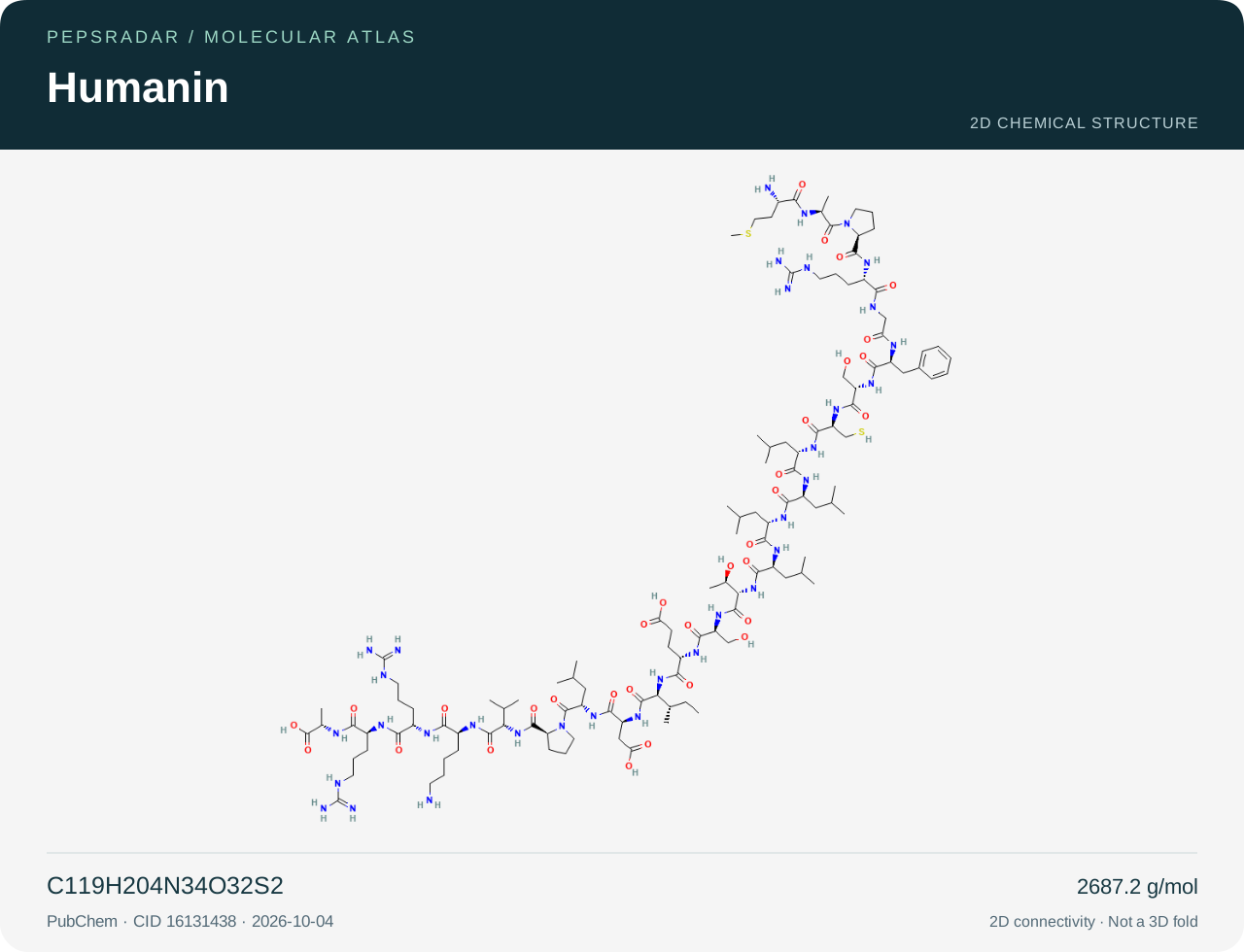
Molecular structure
Mechanism & research rationale
The original report described sequence-dependent protection against selected Alzheimer-related insults in cultured neurons. Protection was selective rather than universal across cell-death mechanisms.
Research context & status
The paper provides a lead for therapeutic research. It does not establish prevention of dementia, improvement in memory, or a longevity use in humans.
What does the evidence show?
Selected published evidence, with the population, findings, and limits kept together. These original summaries draw on publication abstracts; they are not a systematic review.
Neuronal cell experiments · 2001
Original rescue-factor report
A rescue factor abolishing neuronal cell death by a wide spectrum of familial Alzheimer's disease genes and Abeta.
- Population / model
- Cultured neuronal cells exposed to familial Alzheimer-related genes or amyloid-beta.
- Study design
- Functional screening and experiments examining cell survival and peptide sequence.
- Main finding
- Humanin protected against several tested Alzheimer-related cell-death mechanisms, but did not protect against every other insult examined.
- Limits & context
- Selective cell protection is an early biological finding. The study did not test memory, dementia progression, or survival in patients.
Animal / laboratory study · 2009
Humanin and insulin action
What metabolic effects were observed in preclinical experiments?
- Population / model
- Rodent metabolic experiments, including diabetic rats, with additional measurements of circulating humanin in humans and mice.
- Study design
- Insulin-clamp experiments and signaling inhibition tested central humanin and peripheral derivatives; age-related levels were also examined.
- Main finding
- Humanin improved insulin sensitivity in the experiments. Blocking hypothalamic STAT-3 removed important effects. A potent analog reduced blood glucose in diabetic rats; measured humanin levels declined with age.
- How to read it
- Human biomarker observations and rodent intervention results provide different kinds of evidence.
- Limits & context
- No human treatment trial was conducted. Derivatives are not interchangeable with native humanin. These findings do not demonstrate human diabetes treatment, dementia prevention, lifespan extension, or clinical safety.
Read the original paper for methods, adverse events, funding, and conflicts of interest. Publisher access may require a subscription.
Search additional PubMed records ↗New editorial updates
New source discoveries
Links appear automatically. Unreviewed discoveries are not verified medical findings.
Safety & precautions
Safety evidence & remaining uncertainty
A cell-survival assay cannot characterize human adverse effects, interactions, or long-term exposure. Those remain separate questions from whether a cell survives an experimental insult.
This is not a complete list of contraindications, interactions, or adverse effects. Medicine labels apply to specific products and indications; research-use listings are not interchangeable with approved medicines.
What are people discussing?
No editorial transcript note has been reviewed for this profile yet. Below are the matching video records available for exploration; title and caption matches are not verified claims.
Watch the source discussions
0 matching video records · 0 with captions indexed.
Across the full library, 30 caption files are indexed from 20,199 inventoried videos. Most transcripts remain unreviewed. Select a thumbnail or timestamp to watch inside PepsRadar. Thumbnail images load from YouTube.
No matching video has been identified in the current snapshot.
Sources & supplier listings
Listings are grouped by the vendor’s stated identity. Blends and modified derivatives are labeled separately. Inclusion is not a quality assessment or an endorsement.
HUMANIN (10 mg)
American Peptides · Vendor-labeled research use only
$150.00
Listed out of stock · Snapshot 2026-10-05
Options may vary. Shipping and tax excluded.
Affiliate link · PepsRadar may earn a commission from purchases through this link. Affiliate disclosure.
Catalog checked 2026-10-04. Seller listings retain their stated intended use. Shops covered: BioLongevity Labs, BioLongevity Supplements, American Peptides, PSPeptides. This is not a market-wide comparison. Affiliate participation does not determine evidence or editorial coverage.
Questions worth asking
- Was the experiment in cells, animals, or people?
- Is the measured outcome the same one claimed in the video?
- Protection of experimental cells does not establish prevention or treatment of dementia.
- What adverse effects, uncertainty, and conflicts of interest does the original source report?
Frequently asked questions
Were people with Alzheimer disease treated in the cited study?
No. It was a cell-model investigation.
Does “humanin” mean the tested product is approved for humans?
No. A molecule’s name is not a regulatory or clinical-evidence designation.
References & editorial record
Source notes checked 2026-10-04. Original PepsRadar summaries. Not reviewed by a medical professional. Topic grouping is editorial navigation, not a treatment recommendation. Video notes specify which excerpts were reviewed; no full transcripts are published.