 Peps
Peps
What is Pramlintide?
Pramlintide is an adjunctive diabetes medicine used with mealtime insulin in selected patients. It does not replace insulin.
Biological role or research focus
Adjunctive diabetes treatment with mealtime insulin.
The source emphasizes severe hypoglycemia risk. Its role differs from an ordinary supplement.
Role reference: MedlinePlus · Pramlintide ↗
Names you may encounter
Symlin
Search terms can include brands, combinations, or historical names. They are not automatic product equivalents.
- Class / identity
- Amylin analogue
- Main research area
- Post-meal glucose management
- Evidence featured
- Human randomized trial
- Source check
- October 4, 2026
Source: MedlinePlus · Pramlintide ↗
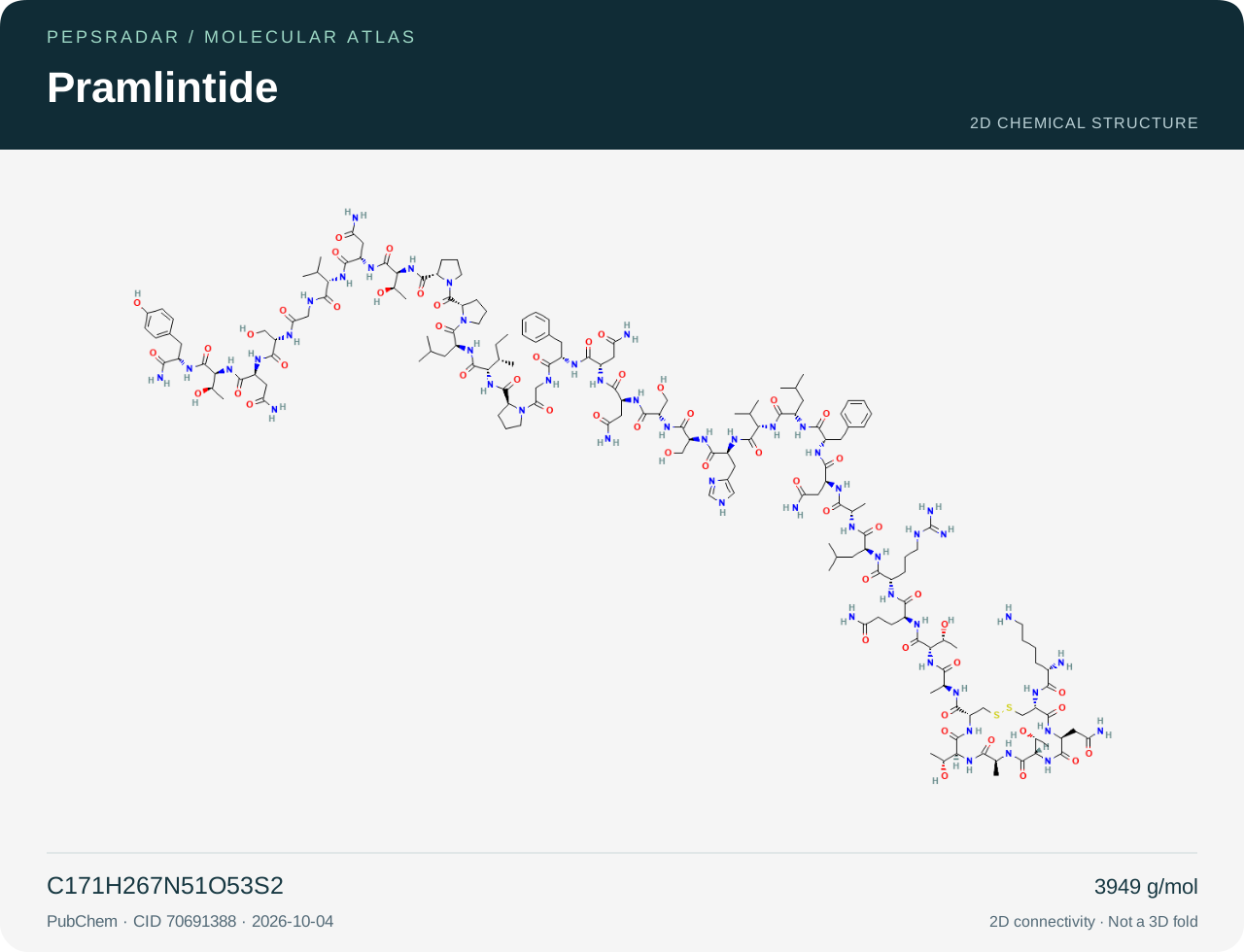
Molecular structure
Mechanism & research rationale
It slows movement of food through the stomach and moderates post-meal glucose excursions. Appetite and weight may also change.
Source: MedlinePlus · Pramlintide ↗
Clinical uses & product context
The medication reference describes selected patients whose glucose remains inadequately controlled with existing insulin-based therapy. The cited trial examined active insulin adjustment alongside the added medicine.
Source: MedlinePlus · Pramlintide ↗
What does the evidence show?
Selected published evidence, with the population, findings, and limits kept together. These original summaries draw on publication abstracts; they are not a systematic review.
Human randomized trial · 2006
Adjunct-to-insulin trial
A double-blind, placebo-controlled trial assessing pramlintide treatment in the setting of intensive insulin therapy in type 1 diabetes.
- Population / model
- 296 people with type 1 diabetes.
- Study design
- Twenty-nine weeks; pramlintide or placebo with actively adjusted insulin therapy.
- Main finding
- HbA1c declined by 0.5 percentage points in both groups. Weight changed by −1.3 kg with pramlintide versus +1.2 kg with placebo. Post-meal glucose excursions improved more with pramlintide. Nausea occurred in 63% versus 36%; severe hypoglycemia event rates were 0.57 versus 0.30 per patient-year.
- How to read it
- A severe-hypoglycemia event rate counts events over time and is not the percentage of participants affected. Improvements in post-meal glucose and weight did not translate into superior HbA1c reduction in this trial.
- Limits & context
- The glucose-management protocol included clinician-directed insulin adjustment. A favorable meal-glucose finding should not be described as superior HbA1c reduction or used as a self-treatment protocol.
Read the original paper for methods, adverse events, funding, and conflicts of interest. Publisher access may require a subscription.
Further reading · 4 additional publication links
Exact-name PubMed search checked 2026-10-04. These records have not been appraised. A name match can include related compounds, combinations, or other formulations; it does not establish safety or benefit.
Amylin: Pharmacology, Physiology, and Clinical Potential. ↗
Pharmacological reviews · 2015 Jul · Journal Article, Research Support, Non-U.S. Gov't, Review
Insulin Resistance in Type 1 Diabetes: Pathophysiological, Clinical, and Therapeutic Relevance. ↗
Endocrine reviews · 2025 May 9 · Journal Article, Review
Read available full text ↗
Development of Cagrilintide, a Long-Acting Amylin Analogue. ↗
Journal of medicinal chemistry · 2021 Aug 12 · Journal Article, Research Support, Non-U.S. Gov't
The story of amylin: from physiology to therapy. ↗
Nature metabolism · 2026 Feb · Journal Article, Review
New editorial updates
New source discoveries
Links appear automatically. Unreviewed discoveries are not verified medical findings.
Safety & precautions
Key precautions
Severe hypoglycemia is a major concern when combined with insulin. Nausea and delayed absorption of oral medicines also matter; changes in insulin treatment require clinical supervision.
Source: MedlinePlus · Pramlintide ↗
Benefit and harm in the insulin-adjunct trial
Even with proactive clinician-directed insulin adjustment, severe hypoglycemia events were more frequent with pramlintide. Nausea was also more common. The trial protocol is part of the intervention and is not a self-directed insulin-adjustment guide.
This is not a complete list of contraindications, interactions, or adverse effects. Medicine labels apply to specific products and indications; research-use listings are not interchangeable with approved medicines.
What are people discussing?
No editorial transcript note has been reviewed for this profile yet. Below are the matching video records available for exploration; title and caption matches are not verified claims.
Watch the source discussions
0 matching video records · 0 with captions indexed.
Across the full library, 30 caption files are indexed from 20,199 inventoried videos. Most transcripts remain unreviewed. Select a thumbnail or timestamp to watch inside PepsRadar. Thumbnail images load from YouTube.
No matching video has been identified in the current snapshot.
Sources & supplier listings
Listings are grouped by the vendor’s stated identity. Blends and modified derivatives are labeled separately. Inclusion is not a quality assessment or an endorsement.
We have not added a supplier for this profile. Missing products and coded listings are not filled with guesses.
Catalog checked 2026-10-04. Seller listings retain their stated intended use. Shops covered: BioLongevity Labs, BioLongevity Supplements, American Peptides, PSPeptides. This is not a market-wide comparison. Affiliate participation does not determine evidence or editorial coverage.
Questions worth asking
- Which indication and formulation does the source describe?
- Does the video make a broader claim than the source supports?
- The source emphasizes severe hypoglycemia risk. Its role differs from an ordinary supplement.
- What adverse effects, uncertainty, and conflicts of interest does the original source report?
Frequently asked questions
Did pramlintide lower HbA1c more than placebo in this trial?
No. Both groups had similar HbA1c reductions, though post-meal glucose and weight differed.
Source: MedlinePlus · Pramlintide ↗
Can the trial be read as permission to replace insulin?
No. Pramlintide was studied as an adjunct to insulin, not as a replacement.
Why can meal glucose improve without a greater HbA1c reduction?
They measure different aspects of glucose control. In this trial both groups received active insulin optimization; the measured HbA1c reduction was similar despite differences in post-meal excursions.
Does an event rate of 0.57 mean 57% of people had severe hypoglycemia?
No. It is a rate per patient-year and can include repeated events in one person. The abstract does not supply a corresponding participant percentage.
Can these findings establish pramlintide alone for obesity?
No. The study enrolled people with type 1 diabetes and tested pramlintide as an adjunct to actively adjusted insulin. That is a different question from stand-alone obesity treatment.
How complete is this evidence review?
This profile summarizes selected NLM abstracts and linked medicine information. It is not a systematic review. Full-text verification and a comprehensive search have not been done, and this summary has not been reviewed by a medical professional.
References & editorial record
- MedlinePlus · Pramlintide ↗
- A double-blind, placebo-controlled trial assessing pramlintide treatment in the setting of intensive insulin therapy in type 1 diabetes. ↗
Source notes checked 2026-10-04. Original PepsRadar summaries. Not reviewed by a medical professional. Topic grouping is editorial navigation, not a treatment recommendation. Video notes specify which excerpts were reviewed; no full transcripts are published.