 Peps
Peps
What is Oxytocin?
Oxytocin is a peptide hormone used in supervised obstetric care. Its established clinical context should be separated from popular social or wellness claims.
Biological role or research focus
Uterine contraction in obstetric care.
Clinical obstetric uses do not establish online claims about bonding, mood, or sexual enhancement.
Role reference: MedlinePlus · Oxytocin ↗
- Class / identity
- Oxytocic hormone
- Main research area
- Obstetric care
- Evidence featured
- Human randomized trial
- Source check
- October 4, 2026
Source: MedlinePlus · Oxytocin ↗
Molecular structure
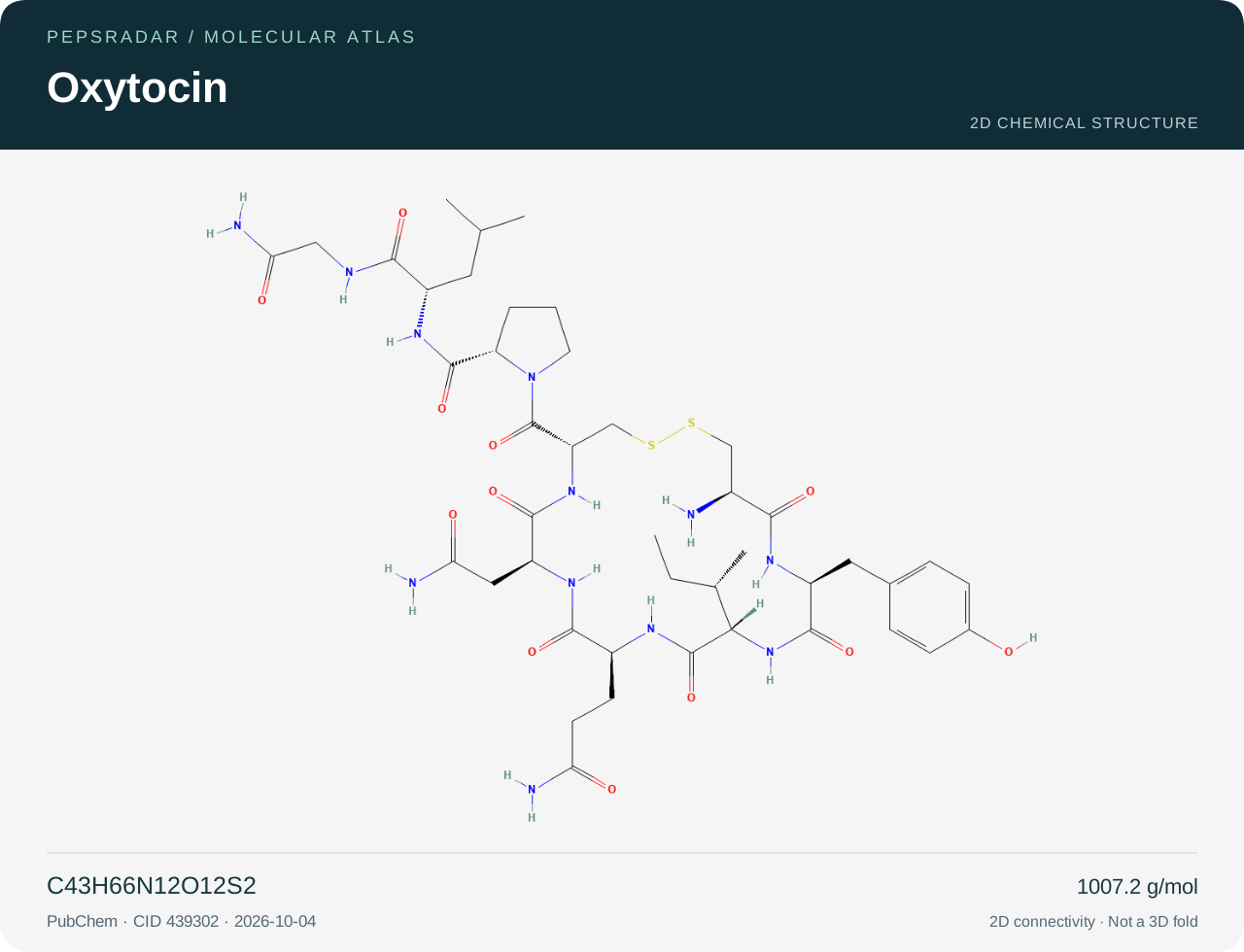
Mechanism & research rationale
It stimulates uterine contractions. That action explains labor-related and postpartum uses but does not establish a predictable improvement in bonding or mood.
Source: MedlinePlus · Oxytocin ↗
Clinical uses & product context
The medication reference describes initiating or strengthening labor contractions and reducing bleeding after childbirth. Clinical circumstances, fetal status, and obstetric contraindications guide its use.
Source: MedlinePlus · Oxytocin ↗
What does the evidence show?
Selected published evidence, with the population, findings, and limits kept together. These original summaries draw on publication abstracts; they are not a systematic review.
Human randomized trial · 2018
Route comparison after vaginal birth
Intramuscular versus intravenous oxytocin to prevent postpartum haemorrhage at vaginal delivery: randomised controlled trial.
- Population / model
- 1,075 women randomized; 1,035 included in analyses at an Irish maternity unit.
- Study design
- Intravenous versus intramuscular oxytocin with matching placebo injections.
- Main finding
- The primary bleeding endpoint was not significantly different. Severe postpartum bleeding, a secondary endpoint, occurred in 4.6% versus 8.1%, favoring intravenous administration.
- Limits & context
- Both groups received oxytocin under clinical supervision. This addresses route selection after delivery, not bonding, mood, or unsupervised nasal-spray use.
Human phase 2 randomized trial · 2021
SOARS-B · intranasal oxytocin
Did social functioning improve in children and adolescents with autism?
- Population / model
- 290 participants aged 3–17; 277 contributed to the modified intention-to-treat analysis.
- Study design
- 24-week placebo-controlled intranasal trial, stratified by age and verbal fluency.
- Main finding
- The primary social-withdrawal score changed by −3.7 versus −3.5 points; difference −0.2 (95% CI −1.5 to 1.0), P=0.61. Secondary outcomes generally did not differ. Adverse-event frequency and severity were similar.
- How to read it
- The larger trial did not show benefit on its measured social or cognitive outcomes.
- Limits & context
- These results concern the studied population, formulation, and duration. They do not establish a general bonding or cognitive-enhancement effect, nor determine outcomes in every other clinical setting.
Read the original paper for methods, adverse events, funding, and conflicts of interest. Publisher access may require a subscription.
Search additional PubMed records ↗New editorial updates
New source discoveries
Links appear automatically. Unreviewed discoveries are not verified medical findings.
Safety & precautions
Key precautions
Excessive uterine stimulation and other serious complications require monitoring by the maternity team. Prior uterine surgery, fetal position, and placental conditions can affect suitability.
Source: MedlinePlus · Oxytocin ↗
This is not a complete list of contraindications, interactions, or adverse effects. Medicine labels apply to specific products and indications; research-use listings are not interchangeable with approved medicines.
What are people discussing?
No editorial transcript note has been reviewed for this profile yet. Below are the matching video records available for exploration; title and caption matches are not verified claims.
Watch the source discussions
11 matching video records · 7 with captions indexed.
Across the full library, 30 caption files are indexed from 20,199 inventoried videos. Most transcripts remain unreviewed. Select a thumbnail or timestamp to watch inside PepsRadar. Thumbnail images load from YouTube.

Mind Pump Show
Hormones, Peptides & Body Transformation with Phil Vella CEO of Vita Bella Health | Mind Pump 2882 ↗
Captions indexed · Automatic matches need review
Mind Pump Show
SS-31 Peptide Benefits: Why Ben Pakulski Says This Is the Most Exciting Peptide | Mind Pump 2912 ↗
Captions indexed · Automatic matches need review

Peptide Of The Week
Telehealth vs Research Peptides: The Truth Nobody Tells You | Peptide of the Week Q&A #61 ↗
Captions indexed · Automatic matches need review
Trevor Kruder
Episode 14: Peptides, Healing & Conscious Wellness: The Science and Spirit of Longevity ↗
Captions indexed · Automatic matches need review

Trevor Kruder
Episode 15: Peptides Explained: Sourcing, Quality & Women’s Health | Ginger Lichlyter ↗
Captions indexed · Automatic matches need review

Trevor Kruder
Episode 17: Klotho & FLGR242 Explained: The Science Behind the Next Generation of Peptides ↗
Captions indexed · Automatic matches need review
Sources & supplier listings
Listings are grouped by the vendor’s stated identity. Blends and modified derivatives are labeled separately. Inclusion is not a quality assessment or an endorsement.
Oxytocin (10mg)
BioLongevity Labs · Vendor-labeled research use only
$64.97
Listed in stock · Snapshot 2026-10-04
Options may vary. Shipping and tax excluded.
Affiliate link · PepsRadar may earn a commission from purchases through this link. Affiliate disclosure.
Oxytocin (5 mg / 10 mg)
PSPeptides · Vendor-labeled research use only
$39.99–$54.99
Listed in stock · Snapshot 2026-10-05
Options may vary. Shipping and tax excluded.
Affiliate link · PepsRadar may earn a commission from purchases through this link. Affiliate disclosure.
Catalog checked 2026-10-04. Seller listings retain their stated intended use. Shops covered: BioLongevity Labs, BioLongevity Supplements, American Peptides, PSPeptides. This is not a market-wide comparison. Affiliate participation does not determine evidence or editorial coverage.
Questions worth asking
- Which indication and formulation does the source describe?
- Does the video make a broader claim than the source supports?
- Clinical obstetric uses do not establish online claims about bonding, mood, or sexual enhancement.
- What adverse effects, uncertainty, and conflicts of interest does the original source report?
Frequently asked questions
Does an obstetric trial validate a bonding nasal spray?
No. Route, population, and outcome all differ.
Source: MedlinePlus · Oxytocin ↗
Did the route-comparison study show every bleeding outcome improved?
No. The primary endpoint was not significantly different; some secondary outcomes favored intravenous administration.
References & editorial record
- MedlinePlus · Oxytocin ↗
- Intramuscular versus intravenous oxytocin to prevent postpartum haemorrhage at vaginal delivery: randomised controlled trial. ↗
- SOARS-B · intranasal oxytocin · 2021 ↗
Source notes checked 2026-10-04. Original PepsRadar summaries. Not reviewed by a medical professional. Topic grouping is editorial navigation, not a treatment recommendation. Video notes specify which excerpts were reviewed; no full transcripts are published.