 Peps
Peps
What is Plecanatide?
Plecanatide is an oral peptide medicine used for chronic idiopathic constipation and IBS with constipation in adults.
Biological role or research focus
Guanylate cyclase-C signaling in constipation care.
The adult clinical context and pediatric dehydration warning are central to reading the source.
Role reference: MedlinePlus · Plecanatide ↗
Names you may encounter
Trulance
Search terms can include brands, combinations, or historical names. They are not automatic product equivalents.
- Class / identity
- Uroguanylin-related GC-C agonist
- Main research area
- Adult constipation care
- Evidence featured
- Human randomized trial
- Source check
- October 4, 2026
Source: MedlinePlus · Plecanatide ↗
Molecular structure
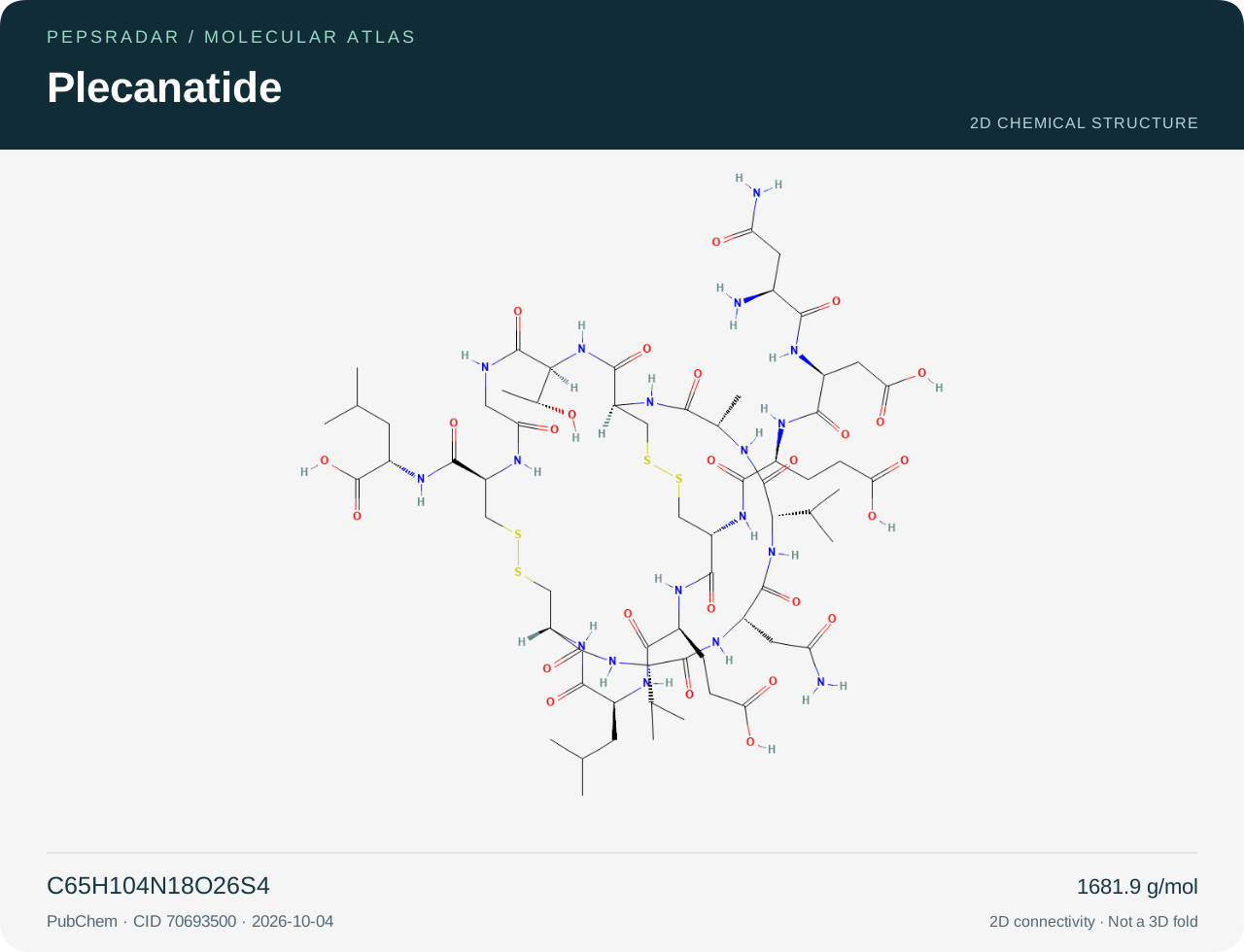
Mechanism & research rationale
It activates guanylate cyclase-C pathways that support intestinal fluid movement and transit. The desired clinical effect is improved bowel function.
Source: MedlinePlus · Plecanatide ↗
Clinical uses & product context
Its medication reference describes adult constipation conditions. The trial measures a sustained bowel-response definition rather than an unspecified detoxification or repair effect.
Source: MedlinePlus · Plecanatide ↗
What does the evidence show?
Selected published evidence, with the population, findings, and limits kept together. These original summaries draw on publication abstracts; they are not a systematic review.
Human randomized trial · 2017
Phase 3 constipation study
A Randomized Phase III Clinical Trial of Plecanatide, a Uroguanylin Analog, in Patients With Chronic Idiopathic Constipation.
- Population / model
- 1,394 people with chronic idiopathic constipation.
- Study design
- Twelve-week blinded study of two plecanatide groups versus placebo, using daily bowel diaries.
- Main finding
- Durable complete-spontaneous-bowel-movement response occurred in 21.0% and 19.5% versus 10.2% with placebo. Diarrhea occurred in about 6% versus 1.3%.
- Limits & context
- A higher response rate does not mean everyone responds. This adult constipation trial does not remove pediatric restrictions or apply to bowel obstruction.
Read the original paper for methods, adverse events, funding, and conflicts of interest. Publisher access may require a subscription.
Further reading · 4 additional publication links
Exact-name PubMed search checked 2026-10-04. These records have not been appraised. A name match can include related compounds, combinations, or other formulations; it does not establish safety or benefit.
American Gastroenterological Association-American College of Gastroenterology Clinical Practice Guideline: Pharmacological Management of Chronic Idiopathic Constipation. ↗
Gastroenterology · 2023 Jun · Practice Guideline, Journal Article
Read available full text ↗
American Gastroenterological Association-American College of Gastroenterology Clinical Practice Guideline: Pharmacological Management of Chronic Idiopathic Constipation. ↗
The American journal of gastroenterology · 2023 Jun 1 · Journal Article, Practice Guideline
Read available full text ↗
Plecanatide. ↗
· 2006 · Review
Efficacy of drugs in chronic idiopathic constipation: a systematic review and network meta-analysis. ↗
The lancet. Gastroenterology & hepatology · 2019 Nov · Journal Article, Research Support, N.I.H., Extramural, Systematic Review, Network Meta-Analysis
New editorial updates
New source discoveries
Links appear automatically. Unreviewed discoveries are not verified medical findings.
Safety & precautions
Key precautions
Diarrhea, dehydration, bowel-obstruction precautions, and pediatric restrictions are central. Severe diarrhea warrants clinical attention rather than being assumed to be a desirable cleansing effect.
Source: MedlinePlus · Plecanatide ↗
This is not a complete list of contraindications, interactions, or adverse effects. Medicine labels apply to specific products and indications; research-use listings are not interchangeable with approved medicines.
What are people discussing?
No editorial transcript note has been reviewed for this profile yet. Below are the matching video records available for exploration; title and caption matches are not verified claims.
Watch the source discussions
0 matching video records · 0 with captions indexed.
Across the full library, 30 caption files are indexed from 20,199 inventoried videos. Most transcripts remain unreviewed. Select a thumbnail or timestamp to watch inside PepsRadar. Thumbnail images load from YouTube.
No matching video has been identified in the current snapshot.
Sources & supplier listings
Listings are grouped by the vendor’s stated identity. Blends and modified derivatives are labeled separately. Inclusion is not a quality assessment or an endorsement.
We have not added a supplier for this profile. Missing products and coded listings are not filled with guesses.
Catalog checked 2026-10-04. Seller listings retain their stated intended use. Shops covered: BioLongevity Labs, BioLongevity Supplements, American Peptides, PSPeptides. This is not a market-wide comparison. Affiliate participation does not determine evidence or editorial coverage.
Questions worth asking
- Which indication and formulation does the source describe?
- Does the video make a broader claim than the source supports?
- The adult clinical context and pediatric dehydration warning are central to reading the source.
- What adverse effects, uncertainty, and conflicts of interest does the original source report?
Frequently asked questions
Did every treated participant meet the trial’s responder definition?
No. About one-fifth did, compared with about one-tenth on placebo.
Source: MedlinePlus · Plecanatide ↗
Is it interchangeable with linaclotide?
They act in a related pathway but are different medicines, with their own evidence and instructions.
References & editorial record
- MedlinePlus · Plecanatide ↗
- A Randomized Phase III Clinical Trial of Plecanatide, a Uroguanylin Analog, in Patients With Chronic Idiopathic Constipation. ↗
Source notes checked 2026-10-04. Original PepsRadar summaries. Not reviewed by a medical professional. Topic grouping is editorial navigation, not a treatment recommendation. Video notes specify which excerpts were reviewed; no full transcripts are published.