 Peps
Peps
What is Terlipressin?
Terlipressin is a vasopressin-related medicine used in a specific hepatorenal-syndrome setting. Its kidney-function results must be considered with the risk of serious respiratory complications.
Biological role or research focus
Hepatorenal syndrome and circulatory physiology.
Improvement in the specified kidney-function endpoint did not demonstrate a survival advantage. Serious respiratory harms are essential context for the result.
Role reference: Terlipressin plus Albumin for the Treatment of Type 1 Hepatorenal Syndrome. · 2021 ↗
- Class / identity
- Vasopressin analogue
- Research focus
- Hepatorenal syndrome and circulatory physiology
- Featured evidence
- Human randomized trial
- Source check
- October 4, 2026
Source: Terlipressin plus Albumin for the Treatment of Type 1 Hepatorenal Syndrome. · 2021 ↗
Molecular structure
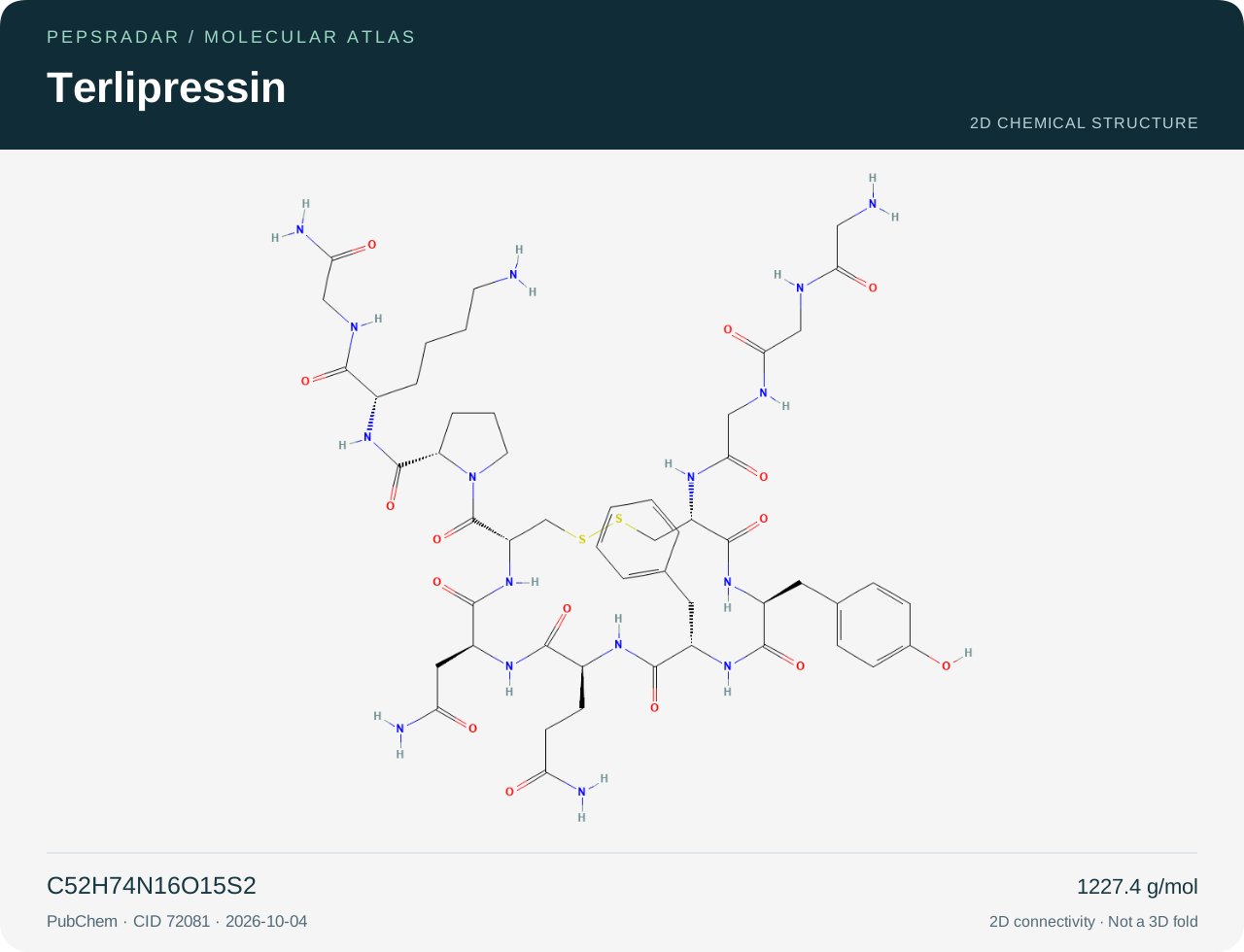
How Terlipressin works
It acts through vasopressin receptor pathways to alter vascular tone. The intended renal benefit is tied to the circulatory disturbance in hepatorenal syndrome, rather than a general kidney-health effect.
Source: Terlipressin plus Albumin for the Treatment of Type 1 Hepatorenal Syndrome. · 2021 ↗
Medicine status & clinical context
Terlipressin is a prescription treatment used to improve kidney function in adults with hepatorenal syndrome and serious liver disease. Its clinical setting and respiratory-risk precautions are central to interpreting the trial results.
MedlinePlus describes use to improve kidney function in adults with hepatorenal syndrome and serious liver disease. It is administered by healthcare professionals and carries an important warning about severe breathing problems.
What does the evidence show?
Selected published evidence, with the population, findings, and limits kept together. These original summaries draw on publication abstracts; they are not a systematic review.
Human randomized trial · 2021
CONFIRM
Did hepatorenal-syndrome reversal improve, and what happened to mortality?
- Population / model
- 300 adults with type 1 hepatorenal syndrome, randomized 199 to terlipressin and 101 to placebo.
- Study design
- Randomized placebo-controlled phase 3 trial; albumin was strongly recommended in both groups.
- Main finding
- Verified hepatorenal-syndrome reversal occurred in 32% versus 17%. At 90 days, deaths occurred in 51% versus 45%; respiratory-disorder deaths occurred in 11% versus 2%.
- Limits & context
- Improvement in the specified kidney-function endpoint did not demonstrate a survival advantage. Serious respiratory harms are essential context for the result.
Source: Terlipressin plus Albumin for the Treatment of Type 1 Hepatorenal Syndrome. · 2021 ↗
Read the original paper for methods, adverse events, funding, and conflicts of interest. Publisher access may require a subscription.
Further reading · 4 additional publication links
Exact-name PubMed search checked 2026-10-04. These records have not been appraised. A name match can include related compounds, combinations, or other formulations; it does not establish safety or benefit.
Editorial musings. ↗
JHEP reports : innovation in hepatology · 2019 Aug · Editorial
Read available full text ↗
Terlipressin given by continuous intravenous infusion versus intravenous boluses in the treatment of hepatorenal syndrome: A randomized controlled study. ↗
Hepatology (Baltimore, Md.) · 2016 Mar · Comparative Study, Journal Article, Multicenter Study, Randomized Controlled Trial
Terlipressin Acetate. ↗
American journal of health-system pharmacy : AJHP : official journal of the American Society of Health-System Pharmacists · 2023 Jan 1 · Journal Article
Terlipressin plus albumin versus midodrine and octreotide plus albumin in the treatment of hepatorenal syndrome: A randomized trial. ↗
Hepatology (Baltimore, Md.) · 2015 Aug · Comparative Study, Journal Article, Randomized Controlled Trial
New editorial updates
New source discoveries
Links appear automatically. Unreviewed discoveries are not verified medical findings.
Safety & precautions
What the featured evidence can tell us
MedlinePlus warns of severe or life-threatening breathing problems. Patient selection and monitoring require clinical assessment; renal endpoint improvement is not sufficient to characterize overall benefit-risk.
Source: MedlinePlus · Terlipressin injection ↗
Identity, route, and evidence limits
Improvement in the specified kidney-function endpoint did not demonstrate a survival advantage. Serious respiratory harms are essential context for the result.
Source: Terlipressin plus Albumin for the Treatment of Type 1 Hepatorenal Syndrome. · 2021 ↗
This is not a complete list of contraindications, interactions, or adverse effects. Medicine labels apply to specific products and indications; research-use listings are not interchangeable with approved medicines.
What are people discussing?
No editorial transcript note has been reviewed for this profile yet. Below are the matching video records available for exploration; title and caption matches are not verified claims.
Watch the source discussions
0 matching video records · 0 with captions indexed.
Across the full library, 30 caption files are indexed from 20,199 inventoried videos. Most transcripts remain unreviewed. Select a thumbnail or timestamp to watch inside PepsRadar. Thumbnail images load from YouTube.
No matching video has been identified in the current snapshot.
Sources & supplier listings
Listings are grouped by the vendor’s stated identity. Blends and modified derivatives are labeled separately. Inclusion is not a quality assessment or an endorsement.
We have not added a supplier for this profile. Missing products and coded listings are not filled with guesses.
Catalog checked 2026-10-04. Seller listings retain their stated intended use. Shops covered: BioLongevity Labs, BioLongevity Supplements, American Peptides, PSPeptides. This is not a market-wide comparison. Affiliate participation does not determine evidence or editorial coverage.
Questions worth asking
- Did improved kidney function mean better survival?
- What population, comparator, and route were actually studied?
- Improvement in the specified kidney-function endpoint did not demonstrate a survival advantage. Serious respiratory harms are essential context for the result.
- What adverse effects, uncertainty, and conflicts of interest does the original source report?
Frequently asked questions
Did improved kidney function mean better survival?
No survival advantage was demonstrated in this trial. The kidney endpoint and respiratory complications must both be considered.
Source: Terlipressin plus Albumin for the Treatment of Type 1 Hepatorenal Syndrome. · 2021 ↗
Does this page establish a supplier’s product quality?
No. A publication describes its own tested material. It does not verify a supplier listing, batch identity, purity, or clinical suitability.
Source: Terlipressin plus Albumin for the Treatment of Type 1 Hepatorenal Syndrome. · 2021 ↗
Does the official medicine reference cover every use discussed online?
No. The reference covers defined products and clinical settings. Research outside those uses needs separate evidence and does not extend the medicine’s authorization.
References & editorial record
Source notes checked 2026-10-04. Original PepsRadar summaries. Not reviewed by a medical professional. Topic grouping is editorial navigation, not a treatment recommendation. Video notes specify which excerpts were reviewed; no full transcripts are published.